 Annotation practice
5 min read
Compare the top data annotation companies, data annotation platforms and data labelling services in 2026, with seven criteria that most lists simply don't include.

Anil Poonia
· 10 min read
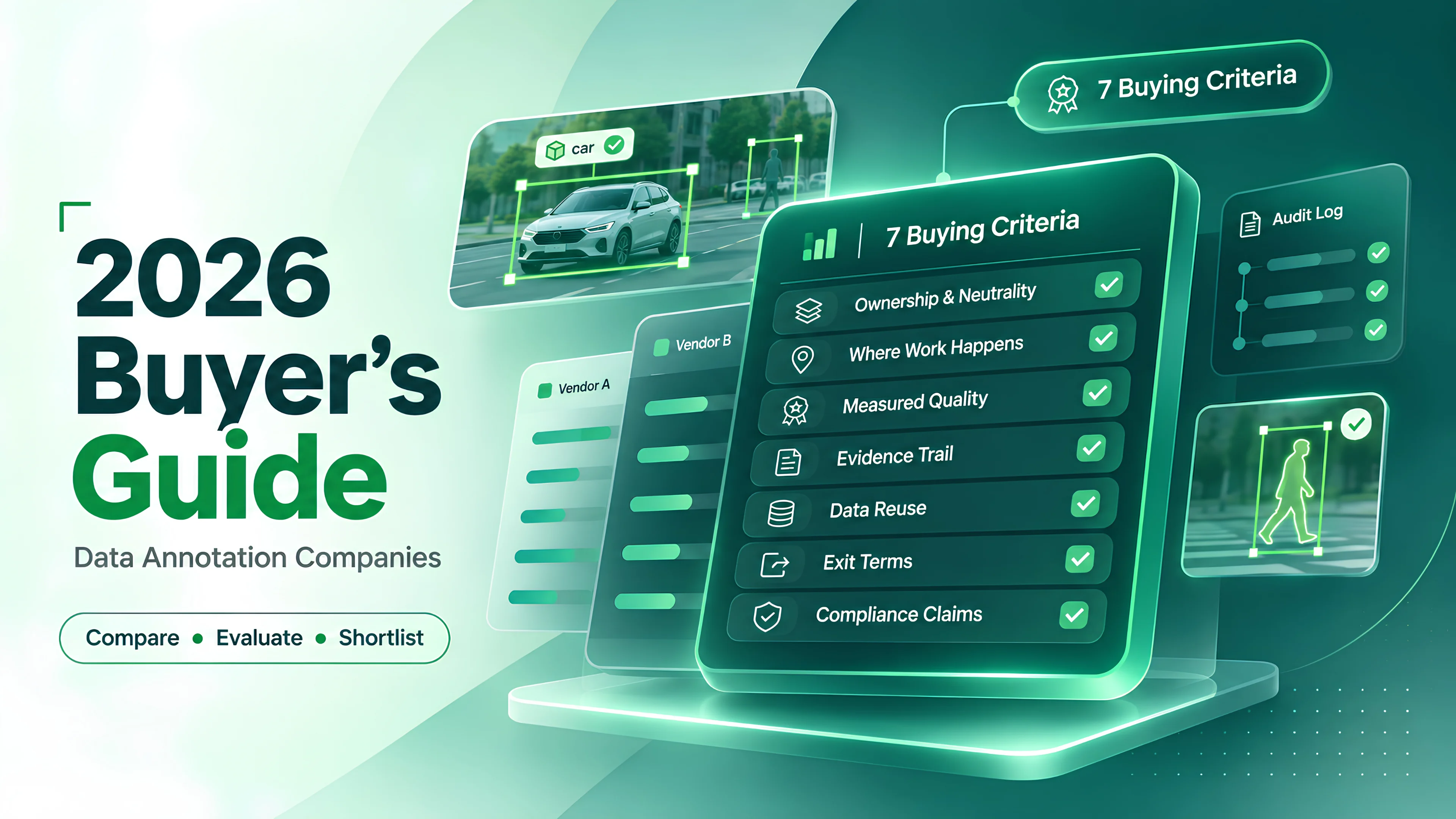
There’s not a single ranked list of the best data annotation companies in 2026. Each one is going to be the best for a different set of needs. Scale AI is the go-to for large scale and GenAI evaluation. Labelbox is the one to go to if you’re looking at expert networks and reinforcement learning. SuperAnnotate is the one that offers the most flexibility in terms of tools and workflows. Encord is the one for physical AI and sensor data. iMerit is the one for managed expert services. Appen is the one for multilingual crowd annotation. LabelFort is the one for audit ready compliance. When you’re looking at a data annotation platform or a data labelling service you need to test seven things: ownership and neutrality, where the work is actually done, the quality that’s measured, the evidence trail, data reuse, the exit terms and the precise compliance claims.
The vast majority of lists of the top data labelling companies are all about size, funding and review ratings. They tell you who’s big, but they don’t tell you whether the work that’s being done will actually pass an audit for a client, be able to answer a regulator’s question or survive a change of ownership.
That last one is very much a real risk. From mid-2025 onwards we’ve seen a frontier model developer purchase a 49% stake in Scale AI, EXL agree to acquire iMerit, and Labelbox expand its contractor network to over a million experts. The data annotation market has evolved, so your way of comparing the companies should evolve with it.
Here’s the framework we use to evaluate data annotation companies, with a quick look at seven of them. We’ll also indicate where LabelFort fits in and when another provider might be the better option.
“Data annotation company” can mean three very different types of business. That’s the most common error people make when shortlisting:
The vast majority of large data annotation companies now offer all three types. It’s important to know which one you’re purchasing, as the onus for quality is very different in each model. With a platform, you’re responsible for quality. With a data labelling service, the vendor is responsible (provided that the contract clearly defines what quality means).
Feature lists for every data annotation platform are pretty much the same. These seven questions will go a long way to help you actually differentiate between the various data annotation companies.
Here’s a side by side of seven data annotation companies, followed by brief profiles. All facts are from the companies’ public announcements and filings.
| Company | What it is | Best for | Ask them |
|---|---|---|---|
| Scale AI | Platform, managed service, government AI | Very large programs, GenAI evaluation, public sector work | How is your data separated from the interests of its largest investor? |
| Labelbox | Data annotation platform plus Alignerr expert network | Frontier labs buying RLHF and evaluation data at scale | Who touches your data, from which country, on what device? |
| SuperAnnotate | Platform with experts and workflows | LLM evaluation and multimodal labelling with optional managed help | Which reviewers are employees and which are contractors? |
| Encord | Data platform for physical AI | Robotics, drones, video, and sensor data | If you need people as well as software, who supplies them? |
| iMerit | Managed data labelling service on Ango Hub, plus Scholars | Medical, mobility, and expert GenAI work | What changes in tooling, pricing, or priorities under the new parent? |
| Appen | Crowd-scale data labelling service | Multilingual data, search relevance, high volume work | Which segment and delivery locations will serve your account? |
| LabelFort | Audit-ready data annotation platform plus managed review teams | Healthcare, BFSI, insurance, and public sector data that must pass an audit | Ask to see the audit record for one labelled item, end to end. |
Scale is still the name that gets mentioned most often in the data annotation space, having worked with the leading frontier model developers, the big corporates (BP, Mayo Clinic etc) and various government programmes. In June 2025 a frontier model developer purchased a 49% non-voting stake in the company for c. $14.3bn and Scale’s founder subsequently left to join them. Francis deSouza (former COO of Google Cloud) became CEO on 10 August 2026.
Best for: very large scale projects, GenAI evaluation and public sector work. Ask: if your models are in competition with the biggest investor in Scale, how do you ensure your data is properly segregated?
Labelbox has its data annotation platform in conjunction with Alignerr (a network of over a million domain experts). It acquired Upcraft in February 2026 and launched Recursion (an RL platform for enterprise agents) in June 2026.
Best for: frontier labs and the sorts of teams that are buying RLHF and evaluation data at scale. Ask: who actually has your data, where does it reside and on what device?
SuperAnnotate is AI data infrastructure (a platform, some experts and some workflows). In February 2026 they launched an MCP server so that AI agents can work directly in the projects. G2 reviewers rate it highly for setup and support. It’s priced by quote only.
Best for: teams who need a robust set of tools for LLM evaluation and multimodal labelling (with the option of having managed support). Ask: which of the reviewers are employees and which are contractors?
Encord is all about physical AI (robotics, drones, autonomous systems etc). In February 2026 they raised $60m in Series C, making their total funding $110m. They have over 300 AI teams as customers (including Woven by Toyota, AXA and Skydio).
Best for: video, multimodal, and sensor data where data management is as important as labelling. Ask: if you need people as well as software, who provides them?
iMerit have been running a workforce since 2012 on the Ango Hub platform. EXL agreed to acquire iMerit in June 2026 for up to $310m. iMerit launched its Scholars platform in October 2026 with over 30,000 vetted professionals across 118 countries.
Best for: medical, autonomous mobility and expert GenAI work as a managed data labelling service. Ask: what will change in terms of tooling, pricing or priorities under the new ownership?
Appen is one of the oldest data annotation companies and is ASX listed. They have a very large multilingual workforce. H1 2026 group revenue was up 17.5% to $119.9m, with Appen China up by around 80% and Appen Global down by around 27%.
Best for: multilingual data, search relevance and high volume crowd work. Ask: which segment and delivery locations are you going to use?
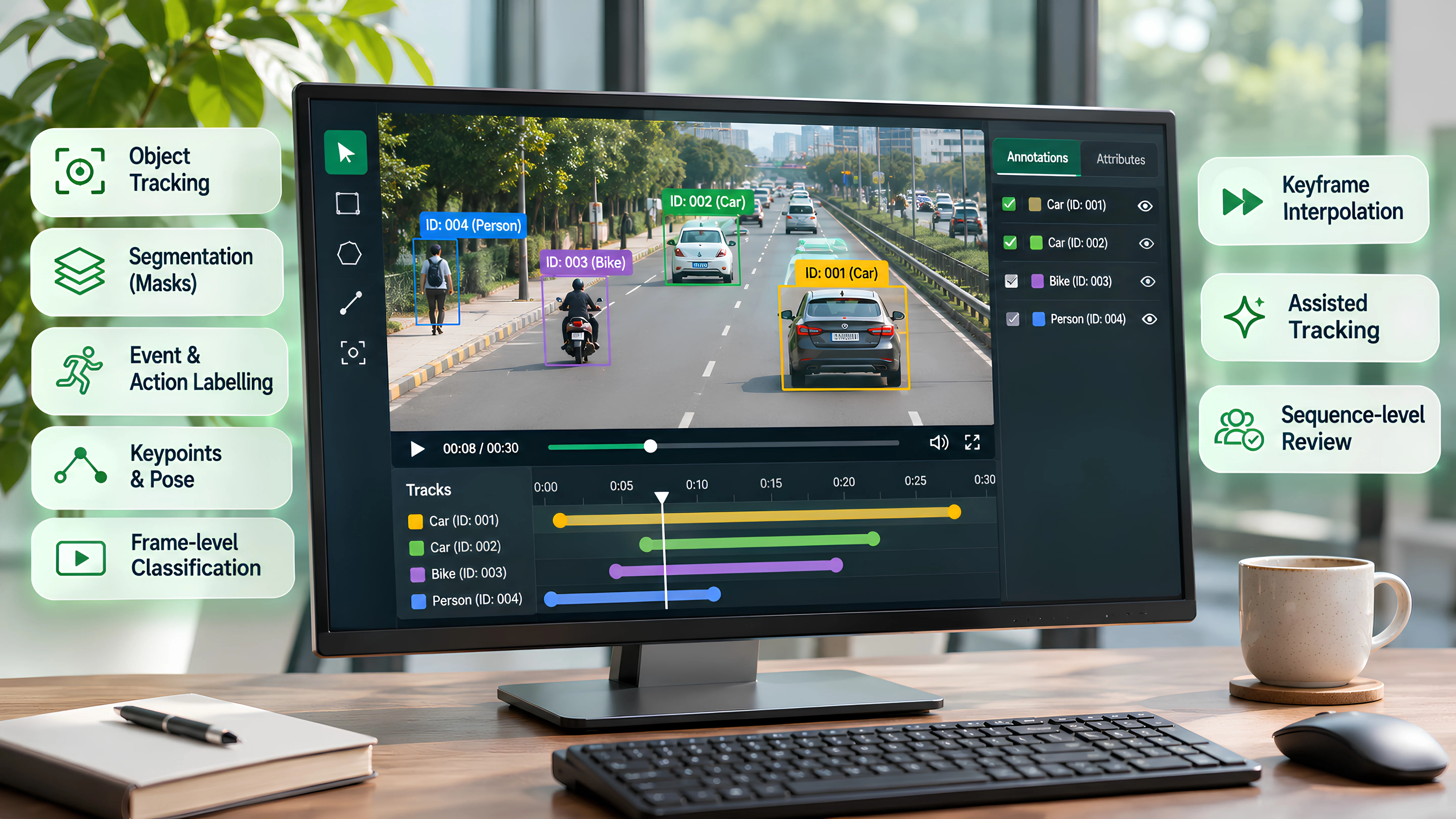
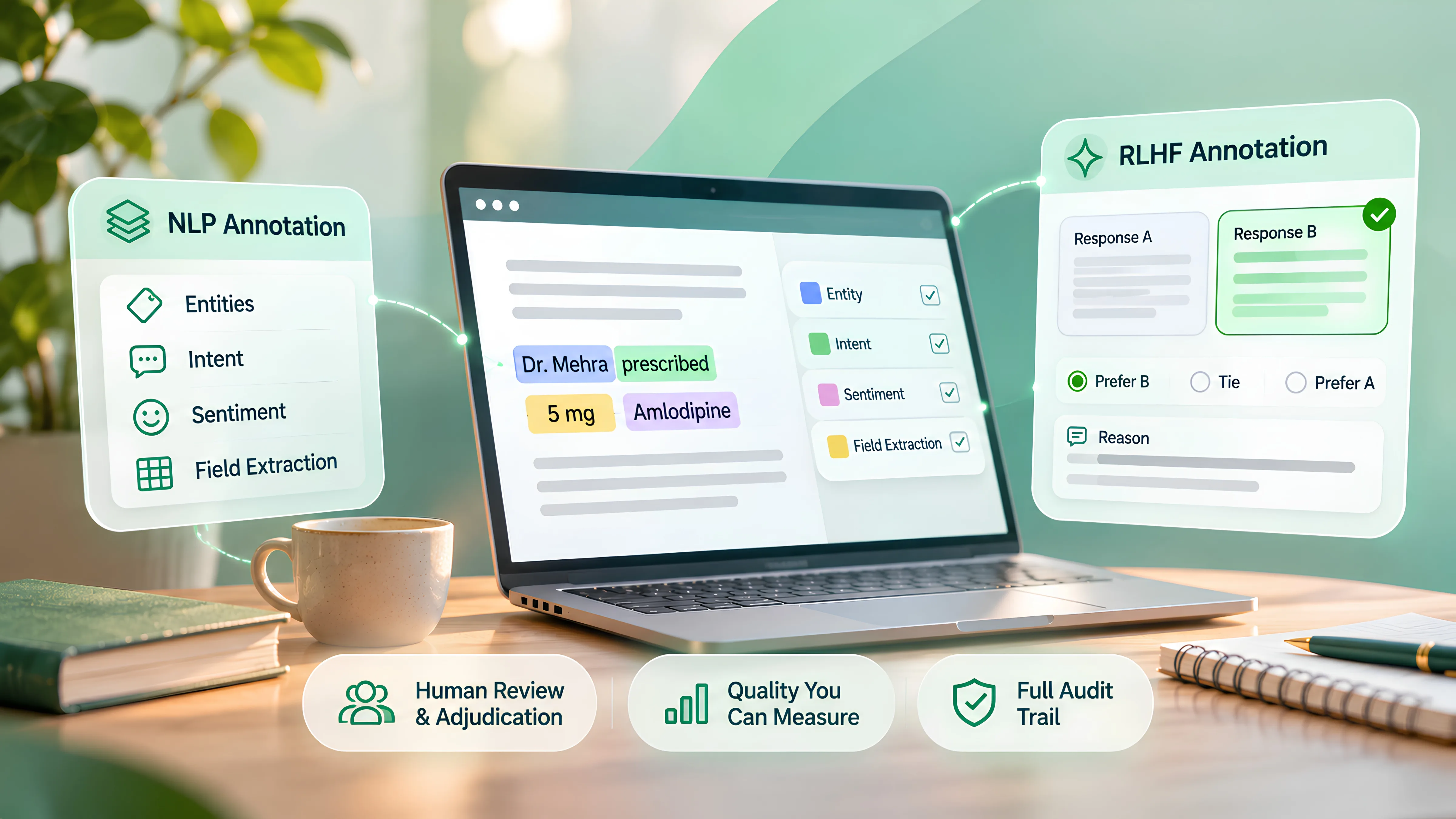
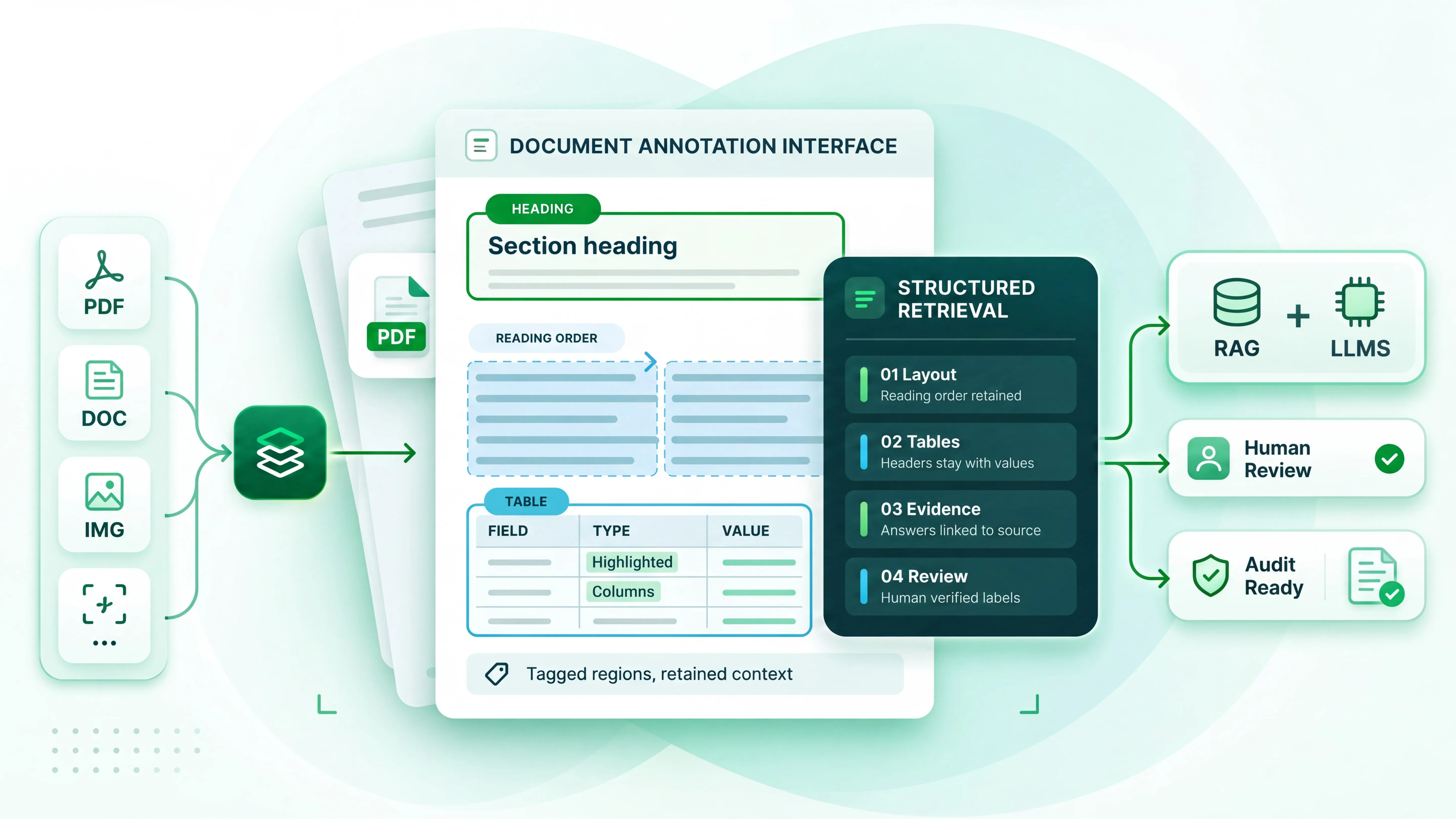
LabelFort is an audit ready data annotation platform for regulated teams, built in house by Predusk AI. Human reviewers trained in house review the AI assisted labelling, and every action is recorded in the evidence trail that Compliance, Legal and Procurement require. Regulated work runs on an on premise annotation floor in India where no pens, no paper, no phones and no personal devices are permitted. Entry and exit is by name and nothing is done remotely. Audit log coverage is 100% by design.
Predusk AI is completely independent and is owned by its Indian founders. It has no cloud provider or Big Tech investor. Client data is never used to train any other model. LabelFort is ISO 27001:2022 certified, SOC 2 compliant, HIPAA ready, GDPR compliant and DPDP Act 2023 ready.
Best suited for: healthcare, BFSI, insurance and public sector teams whose labels are going to be subject to audit. Ask: to see the full audit trail for one labelled item.
It’s better to say it up front. If you need thousands of contributors across the world in a week, then you’re looking at crowd-scale data annotation companies (Appen, Scale AI etc). If you’re a frontier lab buying expert reasoning data in the hundreds of thousands of items then you’re looking at Alignerr and iMerit Scholars. If you already have an in-house team and you just need the software to do the labelling of robotics and sensor data then Encord is a good option.
The gap comes in when the label is only half the deliverable. That is to say when a client auditor, a regulator or a hospital privacy office are going to come and ask “who saw the data, where did they see it and what did the record show”. That’s the gap between a data labelling service you can use and one you can defend.
The best data annotation company for you is the one whose answers you can confidently repeat to your own auditor. Use that as your test, and your list of top data labelling companies will get short fast. To see how LabelFort manages the evidence side of annotation, visit labelfort.ai.
A data annotation platform is the software that your team uses. A data labelling service is the vendor that provides the people and is responsible for the quality of the output. Many leading data labelling companies offer both, so you need to check which one is included in your contract.
Choose data annotation companies that can provide a per item audit trail, controlled physical workspaces, measured inter-annotator agreement and clear compliance language. For healthcare, BFSI and public sector data those four factors are more important than the size of the crowd.
Most data labelling services charge per item, per hour or per annotator. You need to look at the total cost (including rework and QA) rather than just the headline rate. A cheaper label that then fails QA will cost you twice over.
Annotation practice· 5 min read
 Annotation practice
 Annotation practice
IAA scored per cohort, audit trails on every action, evidence exports mapped to EU AI Act Articles 10 & 12.
Certifications & readiness